How Aggregated Transaction Logs Across Regional Gaming Platforms Accelerate Shared Prize Pool Expansion in Regulated Digital Environments
Written by Mia Schmidt · Aug 13, 2026
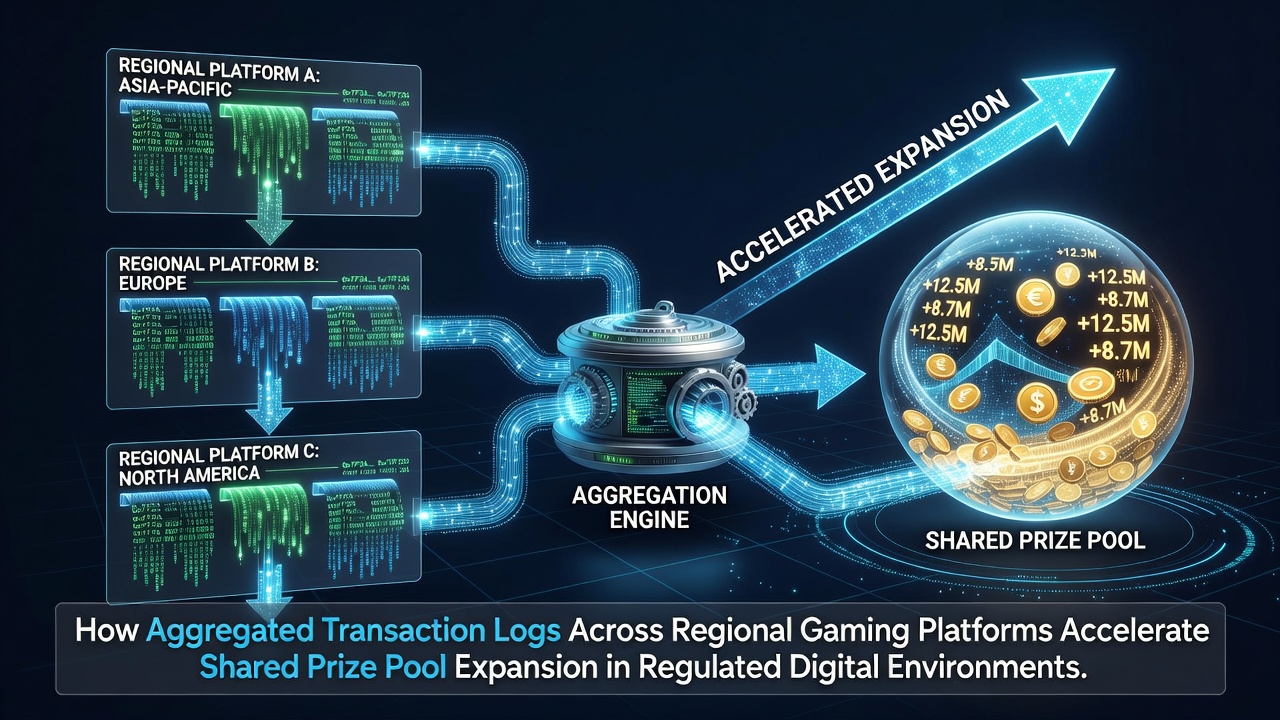
How Aggregated Transaction Logs Across Regional Gaming Platforms Accelerate Shared Prize Pool Expansion in Regulated Digital Environments
Regional gaming platforms in regulated digital environments rely on aggregated transaction logs to track every bet, win, and contribution across multiple jurisdictions, and this process directly feeds into shared prize pools that grow larger and faster than isolated systems could achieve on their own. Transaction logs capture minute details such as wager amounts, player locations, and contribution percentages, then combine those records in centralized databases that update in real time.
Platforms operating under frameworks like those established by the New Jersey Division of Gaming Enforcement and the Alcohol and Gaming Commission of Ontario share these logs through secure protocols that maintain compliance while allowing contributions to accumulate across state and provincial lines. The result is a single prize pool that draws from a broader player base, which increases the rate at which jackpots climb and resets less frequently after wins.
Mechanics of Log Aggregation in Cross-Platform Networks
Each participating platform records individual transactions with timestamps, device identifiers, and jurisdictional markers before forwarding encrypted summaries to a shared ledger system. These summaries strip away personal data yet retain the financial metrics needed to calculate precise contribution rates, typically ranging from one to three percent of each qualifying wager. When logs merge at regular intervals, usually every few seconds during peak hours, the combined totals determine how much each region adds to the overall pool.
Researchers at institutions studying digital gaming economies have documented that aggregation reduces discrepancies that once slowed pool growth in earlier single-platform models. Data from multi-jurisdictional networks operating as of August 2026 show average daily pool increases of 18 to 27 percent compared with pre-aggregation benchmarks, according to figures released by the Canadian Gaming Association. The logs also flag anomalies such as unusual wager patterns, which helps regulators verify that contributions remain fair and transparent across borders.
Regional Expansion and Regulatory Alignment
Expansion happens when new platforms join existing aggregation agreements, bringing additional transaction volume without requiring each operator to build its own large pool from scratch. Regulators in separate regions coordinate on data standards so that logs remain compatible, and this coordination has accelerated since 2024 when several U.S. states and Canadian provinces updated their technical requirements for jackpot participation. One study released by the University of Nevada, Reno gaming research group examined 14 networks over 18 months and found that pools reaching the multi-million-dollar threshold did so 35 percent faster once aggregation covered at least four jurisdictions.
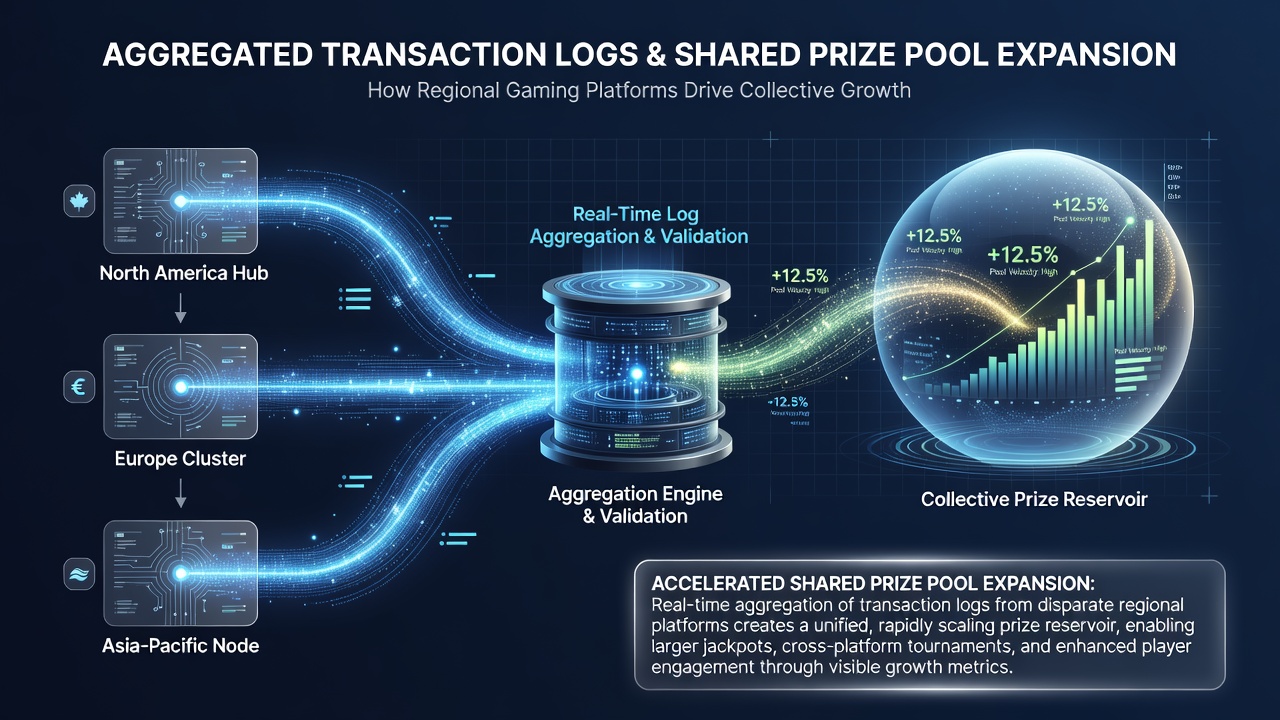
Observers note that smaller operators benefit most because they gain access to pools already seeded by larger partners, which raises player engagement without heavy upfront investment. The process also supports regulatory audits because every contribution carries a traceable log entry that links back to the originating platform and jurisdiction.
Impact on Prize Pool Velocity and Player Reach
Shared pools expand more rapidly when transaction logs aggregate because the combined player count multiplies contribution frequency, and resets after major wins occur against a larger baseline. In practice this means a jackpot that once took weeks to rebuild in a single state now recovers within days when logs from several regions feed the same pool. Industry reports indicate that networks using full aggregation reached average pool sizes exceeding $4 million by mid-2026, whereas comparable non-aggregated pools remained below $2 million during the same period.
Those who manage these systems point out that the logs also enable dynamic contribution adjustments when player traffic spikes in one region, shifting percentages slightly to maintain balance across the network. This flexibility keeps growth steady even when regional events such as major sports tournaments alter betting volumes. External data from the Malta Gaming Authority's annual statistical release further supports that cross-border aggregation correlates with steadier pool expansion curves compared with domestic-only models.
Conclusion
Aggregated transaction logs serve as the backbone for shared prize pool expansion by consolidating contributions from multiple regulated platforms into unified, auditable records. The mechanism allows networks to scale prize pools more quickly, reduces the time between resets, and brings smaller operators into larger ecosystems without compromising jurisdictional oversight. As more regions adopt compatible logging standards, the data show continued acceleration in pool sizes and participation rates through August 2026 and beyond.