How Licensing Shifts Across Jurisdictions Reshape Progressive Jackpot Accumulation Patterns in Online Platforms
Written by Harper Simon · Jul 30, 2026
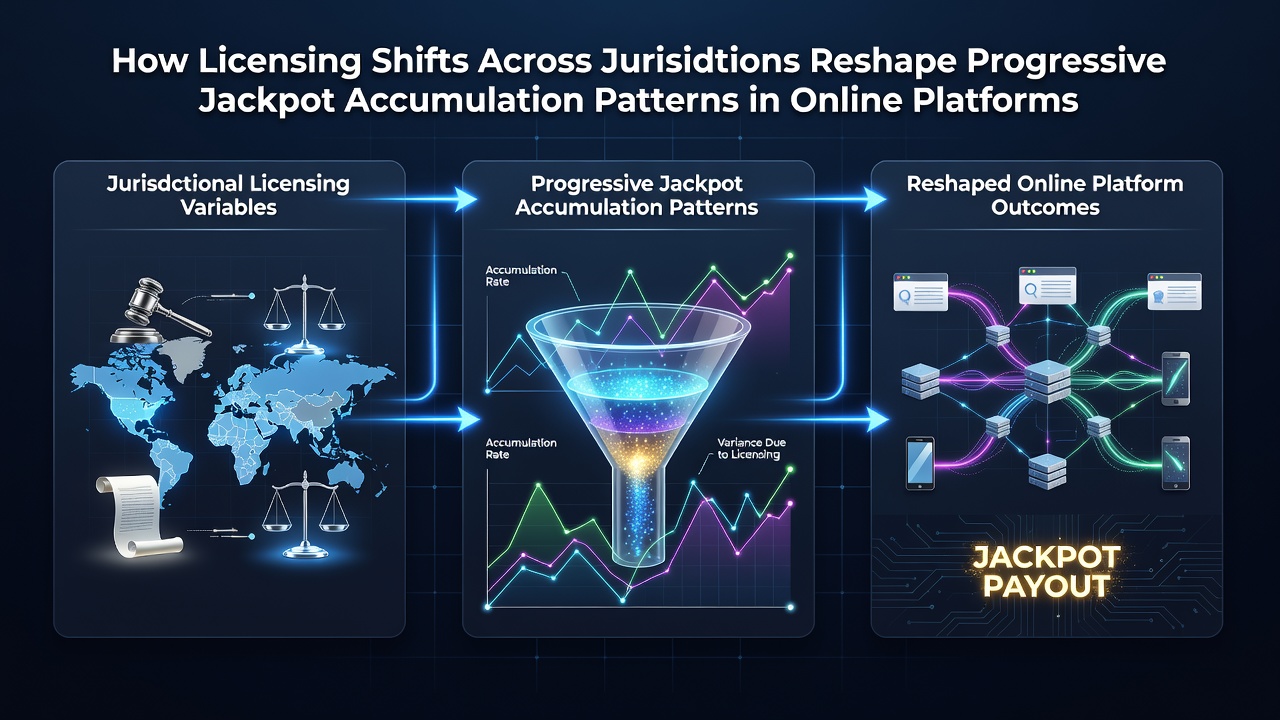
How Licensing Shifts Across Jurisdictions Reshape Progressive Jackpot Accumulation Patterns in Online Platforms
Regulatory changes in licensing frameworks continue to alter the way progressive jackpot pools grow across online platforms, particularly when operators navigate rules that differ sharply between regions. Jurisdictions impose varying contribution rates, eligibility criteria, and cross-border pooling restrictions that directly influence how quickly these shared prizes build and how frequently they trigger. Data from state gaming authorities shows that shifts in license approvals or renewals often force platforms to recalibrate their network structures, which in turn affects accumulation velocity in measurable ways.
Core Mechanics of Progressive Accumulation Under Differing Licenses
Progressive jackpots rely on a small percentage of each wager feeding into a central pool, yet the percentage itself and the permitted player base depend on the license under which an operator functions. In jurisdictions that permit multi-state or international pooling, accumulation proceeds faster because more wagers contribute simultaneously, whereas licenses that confine play to a single territory limit the inflow and extend the time between major payouts. Observers note that platforms operating under several licenses simultaneously must segment their jackpot contributions accordingly, creating separate pools that grow at unequal rates depending on local player volume and regulatory caps.
Take the case of operators holding licenses in both New Jersey and Pennsylvania, where contribution percentages have diverged following recent rule updates. Figures from the New Jersey Division of Gaming Enforcement reveal that certain networks adjusted their cross-state linkages in early 2026, resulting in slower growth for pools restricted to in-state play while broader networks maintained steadier increases. Similar patterns appear in Canadian provincial frameworks, where Ontario's licensing regime allows limited inter-provincial sharing under specific conditions, altering the baseline accumulation speed compared to fully isolated markets.
Impact of License Renewals and New Entrants in Mid-2026
License renewals and new market entries introduce fresh variables into jackpot dynamics, especially around July 2026 when several jurisdictions completed scheduled reviews. Platforms that secure expanded licenses gain access to larger player pools, which accelerates contribution rates, while those facing stricter renewal terms may see their networks shrink or fragment. Research from the Australian Institute of Criminology indicates that such adjustments have historically produced measurable spikes or dips in jackpot sizes within months of regulatory decisions taking effect, as operators realign their technical infrastructure to comply with new geographic boundaries.
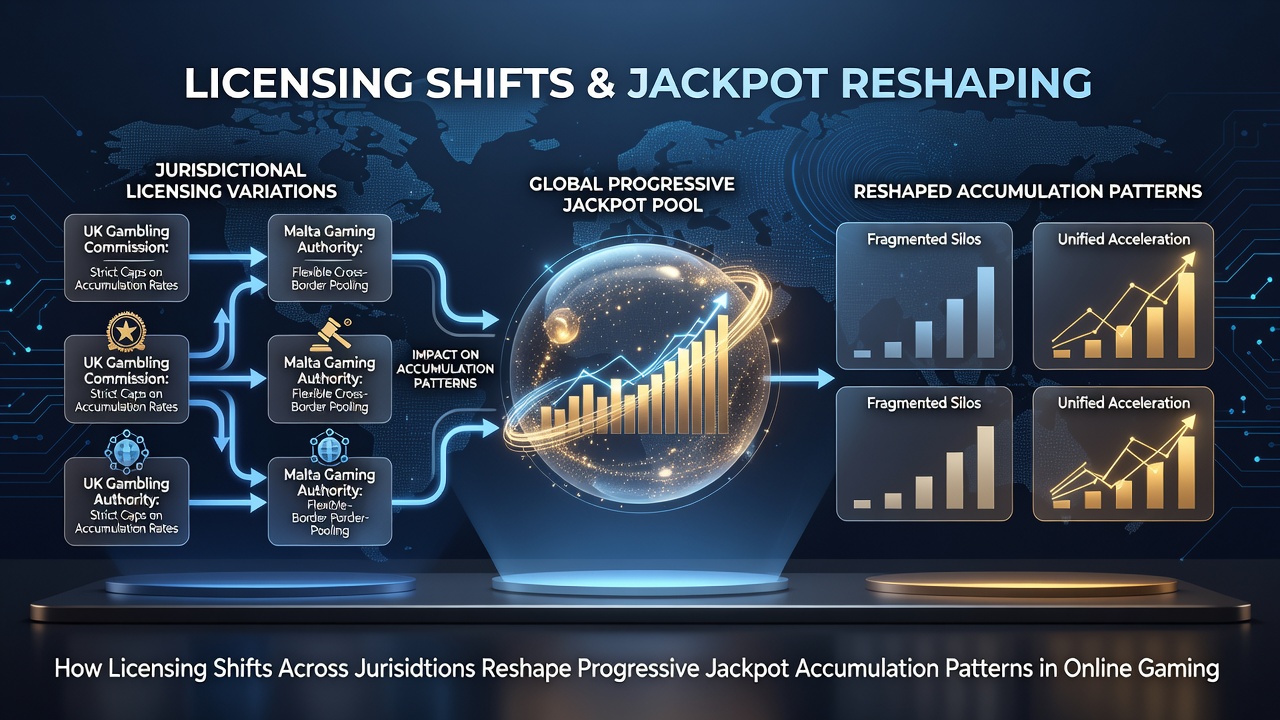
One study tracking European operators found that when a license in one member state was modified to restrict certain bonus mechanics, the associated jackpot contributions dropped by roughly 12 percent within the first quarter, while unaffected jurisdictions continued normal growth. These shifts demonstrate how licensing decisions propagate through the technical layers that manage pooled funds, forcing platforms to either isolate or merge accumulation streams based on the precise wording of each license.
Cross-Border Pooling Restrictions and Technical Adjustments
Many licensing regimes now include explicit clauses about data localization and fund segregation that prevent seamless sharing of progressive pools across borders. Operators respond by deploying segmented ledgers or mirrored systems that mirror contributions only where regulations permit, which fragments what was once a unified accumulation pattern. According to reports compiled by the Gaming Policy and Enforcement Branch in British Columbia, platforms have increasingly adopted modular jackpot engines since 2025 precisely to accommodate these jurisdictional differences without violating license terms.
Players in markets with tighter restrictions often notice smaller average jackpots and longer intervals between wins, while those in more permissive environments see the opposite effect. The reality is that these disparities stem directly from the licensing language rather than from player behavior or game design alone, as the underlying contribution mechanics remain consistent within each licensed segment.
Future Trajectories for Network Structures
As more jurisdictions finalize their approaches to online licensing through 2026 and beyond, the fragmentation of progressive jackpot networks appears likely to persist. Platforms continue refining their systems to toggle contribution pathways on or off depending on the license in force, which produces a patchwork of accumulation speeds rather than uniform global growth. Evidence from academic analyses of multi-jurisdictional gaming suggests that operators with flexible architectures maintain steadier revenue streams, even as individual jackpot pools expand or contract in response to regulatory realignments.
Conclusion
Licensing shifts across jurisdictions directly dictate the scale and speed of progressive jackpot accumulation by setting the boundaries within which pools can receive contributions. Regulatory bodies in different regions enforce distinct rules on pooling, contribution percentages, and geographic reach, compelling platforms to adapt their technical setups accordingly. Data from sources such as the New Jersey Division of Gaming Enforcement and the Australian Institute of Criminology confirm that these adaptations produce observable changes in jackpot behavior within months of license modifications. The resulting patterns reflect the intersection of legal requirements and operational choices rather than any single market force.